Introduction: Fashion Design Is Evolving Faster Than Ever
The fashion industry is undergoing a major transformation, driven by technology, sustainability demands, and the need for faster, more efficient design processes. Traditionally, fashion designing has relied on manual sketching, physical sampling, fabric testing, and lengthy production pipelines. While these methods continue to hold value, the introduction of digital 3D fashion tools—especially CLO 3D—has dramatically changed how fashion designers conceptualize, visualize, and present their ideas.
In 2025, fashion brands, export houses, designers, and manufacturers increasingly prefer designers who understand both traditional design principles and modern digital design processes. This has created an important question for students and professionals entering the field: Should you learn CLO 3D or stick to traditional fashion design?
The truth is that both offer value, but their career growth, salary potential, and future security vary significantly. This blog will help you understand the differences, compare the opportunities, and decide which path offers the strongest career scope in 2025 and beyond.
Understanding Traditional Fashion Designing
Traditional fashion design refers to the classic process of creating garments through hand sketches, flat patterns, fabric draping, measuring, sampling, cutting, stitching, and physical garment construction. This approach has been the backbone of the fashion industry for decades and remains relevant because it teaches fundamental skills without which no designer can succeed. Construction techniques, fabric knowledge, measurement systems, and garment behavior are concepts that every designer must master.
Traditional fashion designing is a tactile and sensory experience. Designers feel the fabrics, experiment with drapes, test the weight and fall of materials, and understand how physical garments behave. These skills are essential because fashion is ultimately a physical product that exists in the real world. No digital tool can replace the understanding that comes from physically working with textiles.
However, traditional design also has limitations. It is slow, expensive, labor-intensive, and often wasteful. A single physical sample can take days to create, and multiple iterations significantly increase costs. Brands now look for solutions that reduce time and financial investment while maintaining creative freedom—and that’s where CLO 3D comes in.
Understanding CLO 3D and Digital Fashion Design
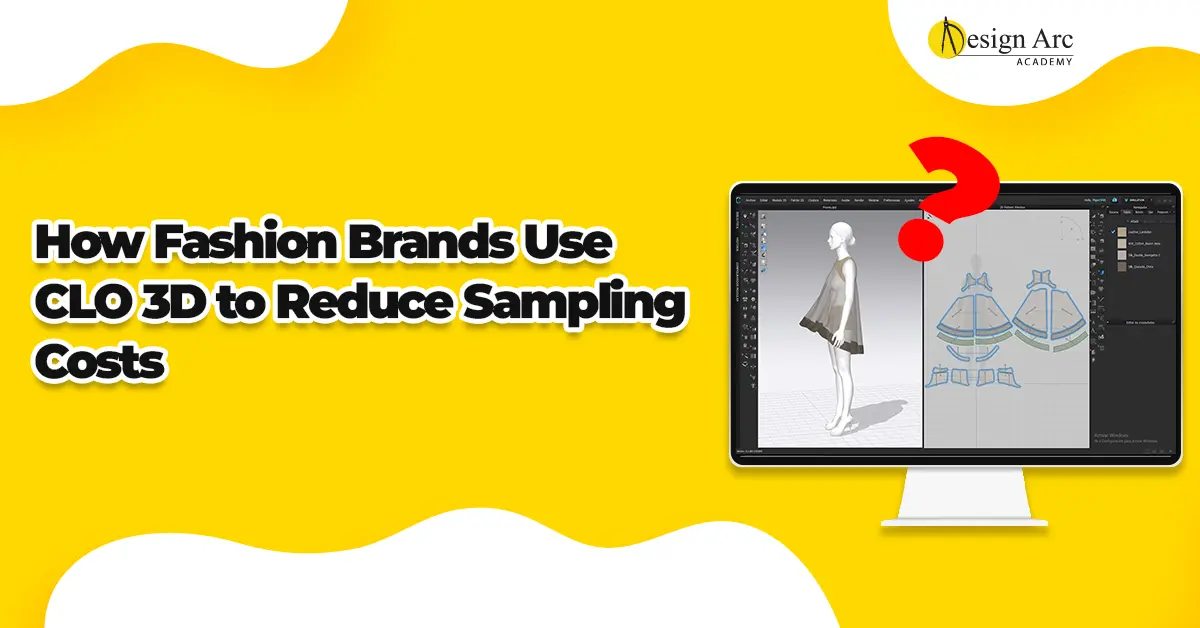
CLO 3D is one of the world’s leading fashion design software programs that allows designers to create realistic 3D garments, simulate fabric behavior, test patterns, and visualize outfits without stitching a single physical sample. CLO 3D has transformed the industry by offering designers the ability to experiment freely, make instant edits, and produce highly realistic digital garments that can be used for presentations, marketing, and even production.
In CLO 3D, designers can import patterns or create them from scratch, drape them on customizable 3D avatars, apply stitching, simulate real fabric physics, adjust garment tension, and create full fashion collections entirely on-screen. This eliminates the need for multiple rounds of physical sampling, reducing both time and material wastage.
CLO 3D has become so influential that major international brands—Zara, H&M, Nike, Calvin Klein, Tommy Hilfiger, Dior, Uniqlo, and Adidas—now rely heavily on 3D fashion design workflows. This shift is reshaping the career landscape, creating new job opportunities and dramatically increasing demand for designers who can work digitally.
How CLO 3D Is Transforming the Fashion Industry
CLO 3D is not simply a tool—it represents a new era of fashion design. The industry’s shift towards sustainability, speed, and digital-first workflows has made CLO 3D more relevant than ever. Brands today want designers who can produce fast results without compromising quality. With supply chains becoming more global and competitive, digital fashion solutions are essential.
CLO 3D allows brands to create virtual samples, eliminate multiple rounds of physical sampling, and make decisions faster. Instead of spending weeks waiting for samples to arrive from factories, designers and manufacturers can collaborate digitally in real time. This increases efficiency, reduces costs, and supports sustainability goals by reducing textile waste.
Key Advantages of CLO 3D in 2025
While CLO 3D does not replace traditional fashion skills, it brings a new dimension of speed, flexibility, and creative power. The ability to test fabrics, patterns, motion, and fit without a single cut of cloth has made CLO an essential part of the modern fashion designer’s toolkit.
Why CLO 3D Has Become Essential
- Faster design cycles: Digital garments reduce sampling time dramatically.
- Lower material waste: Brands save costs by avoiding unnecessary physical samples.
- High realism: CLO’s simulation engine allows designers to visualize fabric weight, drape, and flow with accuracy.
These benefits have convinced brands globally to adopt digital-first workflows.
Why Traditional Fashion Designing Still Matters
Despite the rise of CLO 3D, traditional fashion design remains irreplaceable. Understanding how fabric behaves in real life, how patterns translate when cut, and how garments fit on real bodies is fundamental knowledge. No digital tool can replace the tactile experience of working with cloth, measuring bodies, stitching seams, or finishing garments manually.
Technology enhances the design process but cannot replace creativity, craftsmanship, or physical construction knowledge. Designers who rely solely on digital tools without traditional understanding often struggle with real-world production issues. The strongest designers in 2025 are not those who use only CLO or only traditional techniques—but those who combine both.
Traditional fashion training teaches designers discipline, problem-solving, pattern construction, tailoring techniques, and foundational craftsmanship. These are the skills that give depth to a designer’s creative vision and enable them to design garments that are not only beautiful but functional.
Career Opportunities Comparison: CLO 3D vs Traditional Fashion Designing
When comparing career scope, CLO 3D has opened up entirely new job roles that did not exist a decade ago. Digital fashion designers, 3D garment technicians, virtual sampling specialists, and product visualization experts are now among the most sought-after professionals in fashion houses.
Traditional designers continue to find roles in apparel manufacturing, export houses, boutique labels, custom tailoring studios, and merchandising. However, the demand for purely traditional designers is stabilizing, while the demand for CLO 3D-skilled designers is rising rapidly as more companies adopt digital workflows.
Career Opportunities with CLO 3D
- 3D Fashion Designer
- CLO 3D Specialist
- Virtual Sampling Artist
- Digital Pattern Maker
- 3D Apparel Technician
These roles offer faster growth and higher salaries because they directly impact efficiency, cost reduction, and speed to market.
Salary Comparison and Job Growth
The salary landscape for CLO 3D designers is significantly more promising due to the scarcity of skilled digital designers. Traditional designers are plentiful, which makes competition higher and salaries relatively stable. CLO 3D designers, on the other hand, are in high demand with lower supply, which naturally increases earning potential.
Companies pay more for CLO specialists because they reduce physical sampling costs, speed up production cycles, and offer more accurate design communication. Export houses, global fashion brands, and large manufacturers prefer designers who can blend technical pattern-making skills with digital execution. This hybrid skillset creates a competitive advantage and positions CLO designers for faster promotions and international opportunities.
Which Path Is Better for Students Beginning in 2025?
For students starting their fashion journey in 2025, the best path is not to choose between CLO 3D and traditional fashion—it is to combine both. Traditional design gives you fundamental knowledge. CLO 3D gives you relevance and modern industry appeal. Together, they create a powerful combination that makes you employable globally.
Why Learning Both Is the Smartest Choice
- You understand garment construction physically and digitally.
- You can communicate with tailors, pattern masters, and manufacturers more effectively.
- You become valuable in both boutique and global fashion environments.
The future demands hybrid designers who can navigate traditional craftsmanship and digital innovation seamlessly.
Which Skills Matter Most for Future-Proof Fashion Careers?
To succeed in 2025 and beyond, fashion designers need to combine creative, technical, and digital skills. Traditional sketching, pattern making, and garment construction will always be foundational. But adding CLO 3D, digital visualization, and virtual sampling makes you a future-ready designer who can adapt to industry transformation.
Being a fast learner, staying updated with emerging tools, and building a strong digital portfolio are essential. Employers increasingly prefer designers who can showcase both physical garments and digital simulations side by side. It tells them you understand the past, present, and future of fashion.
Conclusion: CLO 3D and Traditional Fashion Are Stronger Together
When deciding between CLO 3D and traditional fashion design, the answer is not “which one is better”—it is “how do they complement each other?” CLO 3D alone is powerful but incomplete without an understanding of real garment behavior. Traditional fashion alone is timeless but slower and less efficient in a digital-first industry.
The designers who stand out in 2025 are those who understand the craft of fashion and the technology that drives modern fashion businesses. CLO 3D offers higher salary potential, faster workflow, and global job opportunities. Traditional designing provides foundational strength, creative depth, and hands-on skills. Together, they create a designer who is truly ready for the future.
If you want a career that grows, adapts, and opens global opportunities, learning both CLO 3D and traditional fashion design is the smartest move you can make in 2025.