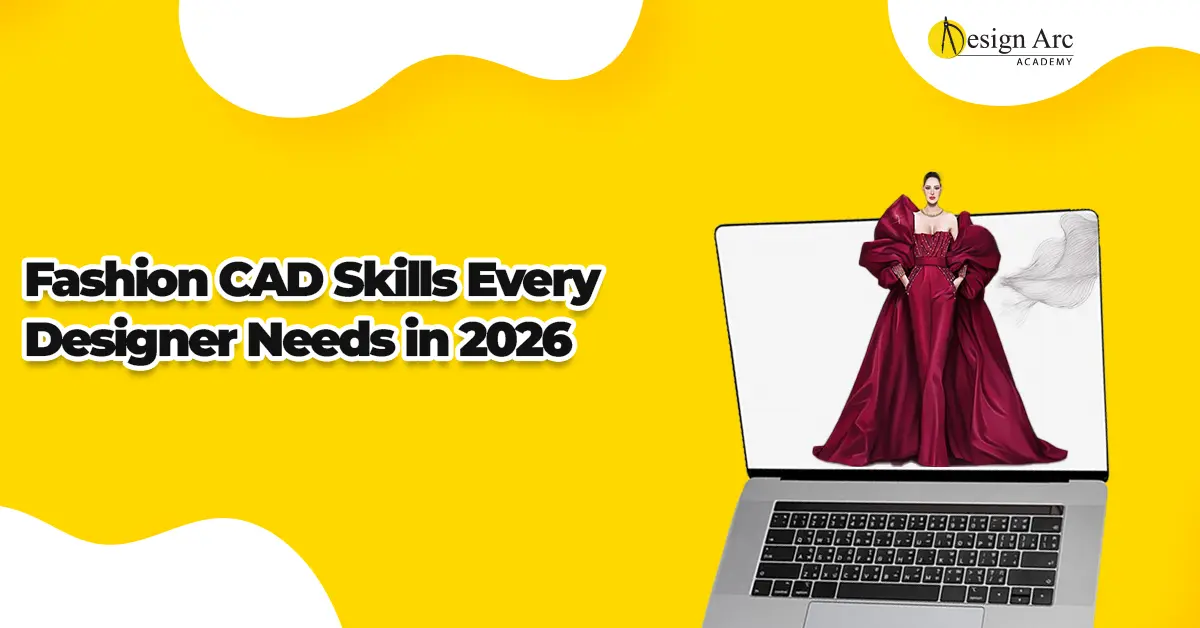
The fashion industry in 2026 is no longer driven only by creativity. It is driven by technology, speed, and precision.
Designers who once relied entirely on hand sketches and manual drafting are now expected to understand digital tools. As production cycles shorten and sustainability pressures increase, Fashion CAD skills have become essential rather than optional.
Search queries like fashion CAD skills, CAD for fashion design, and computer aided fashion design course are rising because students and professionals want clarity on what to learn to remain employable.
This guide explores the key Fashion CAD skills every designer must develop in 2026, how they impact career growth, and why digital proficiency is shaping the future of apparel production.
What Is Fashion CAD in 2026?
Fashion CAD (Computer-Aided Design) refers to digital tools used for designing, drafting, grading, and visualizing garments.
Modern Fashion CAD includes:
- Digital pattern drafting
- Technical flat creation
- Garment simulation
- Fabric behavior testing
- Size grading
- Production-ready file exports
Unlike traditional drafting, Fashion CAD integrates creativity with technical accuracy. In 2026, many apparel manufacturers expect designers to submit digital files instead of paper patterns.
Why Fashion CAD Is Now Mandatory
Fashion brands face pressure to:
- Reduce development timelines
- Improve accuracy
- Lower sampling costs
- Streamline production
Manual workflows slow production. Digital workflows accelerate it.
Designers without CAD skills may struggle to compete in export houses, manufacturing units, and large brands.
In India — particularly in production hubs like Mumbai, Delhi, Bangalore, and Tiruppur — employers increasingly prioritize digital garment expertise.
Essential Fashion CAD Skills in 2026
1. Digital Pattern Drafting
Creating base patterns digitally is fundamental. This includes:
- Bodice drafting
- Sleeve construction
- Collar variations
- Skirt and trouser patterns
- Seam allowances and notches
Without pattern accuracy, garment simulation fails. Digital drafting enables precise measurement adjustments without redrawing manually.
2. Garment Simulation & Visualization
Modern CAD tools include 3D simulation features. Designers must know how to:
- Apply digital fabrics
- Test drape behavior
- Adjust garment fit
- Visualize garments on digital avatars
This reduces physical sampling and enhances buyer presentations. Simulation skills distinguish advanced digital designers from basic CAD users.
3. Technical Flats & Spec Sheets
Technical documentation remains essential in production. Designers must prepare:
- Front and back flats
- Construction details
- Stitch placements
- Measurement charts
Factories depend on accurate technical documentation for correct garment manufacturing.
4. Pattern Grading
Size grading is critical for mass production. Designers must understand how to:
- Scale patterns across size ranges
- Maintain garment proportions
- Avoid distortion during resizing
Digital grading tools increase speed but still require strong technical understanding.
5. File Export & Production Workflow
Designing digitally is not enough. Designers must know how to:
- Export production-ready files
- Communicate with factories
- Collaborate with technical teams
- Prepare marker layouts
Understanding workflow integration ensures smooth transition from design to manufacturing.
Fashion CAD vs Traditional Designing
Traditional design emphasizes creativity and manual sketching.
Fashion CAD emphasizes precision, efficiency, and scalability.
In 2026, successful designers combine both. Creativity attracts attention. Technical digital precision ensures execution.
Ignoring CAD limits job opportunities in production-focused environments.
Career Scope for Fashion CAD Professionals
Fashion CAD expertise opens roles such as:
- CAD Designer
- Technical Fashion Designer
- Digital Pattern Maker
- Garment Technologist
- Apparel Product Developer
Freelancers can offer:
- Pattern drafting services
- Digital tech pack creation
- Garment simulation visualization
- Size grading services
Digital workflow knowledge expands career flexibility.
Salary and Growth Potential in India
Fashion CAD professionals working in export houses and manufacturing units earn competitive salaries based on experience and technical proficiency.
Freelancers may charge per project for drafting, grading, and tech pack services.
In 2026, CAD-integrated designers often earn more than purely conceptual designers because they contribute directly to production efficiency.
Common Mistakes Students Make
- Focusing only on software tools without garment fundamentals
- Ignoring manual construction knowledge
- Skipping practice in pattern accuracy
Fashion CAD is not about memorizing software features. It is about applying technical garment logic digitally.
Balanced learning produces stronger professionals.
Frequently Asked Questions
Is Fashion CAD difficult to learn?
It requires technical understanding, but structured training makes it manageable.
Is Fashion CAD better than manual pattern making?
Both are important. Manual drafting builds fundamentals; CAD enhances efficiency and scalability.
Is Fashion CAD in demand in India?
Yes. Export houses and production units increasingly require CAD proficiency.
Can Fashion CAD lead to freelance opportunities?
Yes. Designers can offer digital drafting, grading, and tech pack services to brands and manufacturers.
Final Thoughts
Fashion in 2026 is technology-driven. Digital precision and speed define success in modern garment production.
Fashion CAD skills are no longer optional — they are core competencies.
Designers who invest in digital drafting, simulation, grading, and workflow integration position themselves strongly in an evolving industry.
Creativity remains essential, but technical digital expertise determines long-term career growth.
Those who adapt to digital workflows will lead the future of fashion.