Introduction: The AI Revolution Has Arrived — But So Has the Truth
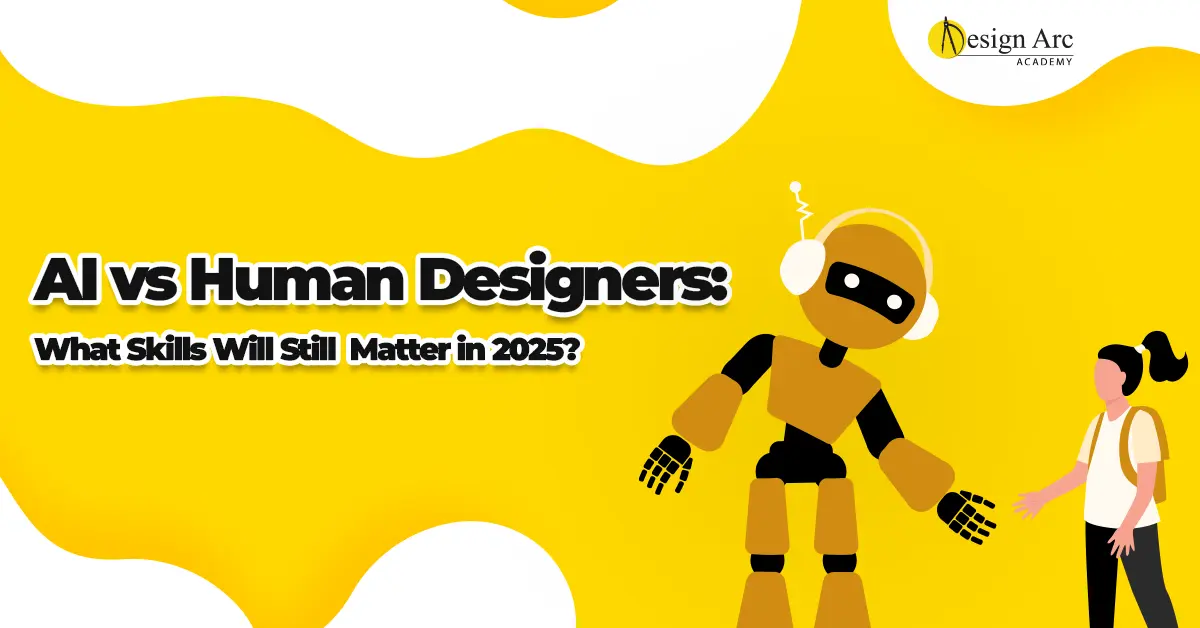
Over the last three years, AI has become one of the most disruptive forces in the design industry. Tools like Midjourney, Adobe Firefly, DALL·E, and even Canva’s AI features have made it easier than ever to generate visuals, templates, illustrations, and even full brand concepts within minutes. This rapid improvement has led many people—especially new designers—to fear that AI may eventually replace human creativity entirely. But the reality is far more nuanced and, in many ways, far more empowering for designers.
AI is powerful, but it is also predictable. It generates content based on existing patterns. Humans, on the other hand, bring emotion, strategy, originality, storytelling, and cultural understanding—qualities AI simply cannot replicate. In 2025, the designers who thrive are not the ones who resist AI, nor the ones who rely on it entirely, but the ones who learn how to work with it, guide it, refine it, and use it as an extension of their own creativity. This blog breaks down what AI can do, what it cannot do, and most importantly, the skills that human designers must master to remain valuable in an increasingly AI-driven world.
AI as a Tool, Not a Replacement
AI today can generate stunning visuals, logos, posters, illustrations, and even full layouts. But despite its impressive output, AI lacks intention. It does not understand the client’s brand story, values, mission, emotional goals, or audience psychology. It simply predicts and replicates patterns learned from billions of existing images. This makes AI a great assistant—but a very poor art director.
Designers who understand how to use AI effectively are able to significantly speed up their workflow. What used to take hours—such as brainstorming concepts, generating inspiration, creating mood boards, or exploring style variations—can now be done in minutes. AI helps designers generate starting points, but the refinement, direction, and decision-making still depend entirely on human expertise.
AI’s strength lies in production, not judgment or strategy. And for businesses that want brand identity, consistency, storytelling, and emotional engagement, human designers remain irreplaceable.
What AI Does Extremely Well (and What Designers Should Use It For)
AI tools have become incredibly efficient assistants, capable of accelerating the early stages of the creative process and handling repetitive or time-consuming work. Designers use AI today not as a replacement for creativity but as a way to make the creative journey faster and more exciting.
Where AI Excels
- Rapid idea generation: AI can produce dozens of concept directions based on a single prompt.
- Visual exploration: Trying different styles, moods, textures, or colors becomes instantaneous.
- Creating realistic environments: AI-generated environments help with mockups, branding presentations, and storytelling.
- Refining repetitive tasks: Background removal, noise correction, resizing, cleanup, and color grading are significantly faster.
AI allows designers to move quickly from ideation to refinement, helping them deliver more polished final outputs. But even in these strengths, humans remain necessary because AI cannot determine which option will best serve the brand or the client’s goals.
Where AI Fails (and Where Human Designers Win)
AI can generate aesthetically impressive visuals, but it lacks understanding. It cannot grasp emotional nuance, cultural sensitivity, originality, or the deeper meaning behind design decisions. This is where human designers hold an unshakeable advantage.
AI often struggles with consistency, especially in brand identity. If a brand needs a logo, packaging, website, and social media assets, AI will produce outputs that look good individually but fail to align as a unified identity system. Consistency, strategy, and storytelling are qualities only humans can deliver.
AI also cannot understand the psychology of design—why a certain color works for a wellness brand but not a tech brand, why a minimalist layout creates trust, why specific typography evokes nostalgia, or why a particular composition drives conversions. These decisions require experience, insight, and empathy—traits AI does not possess.
Human designers bring authenticity, emotional intelligence, reasoning, and cultural awareness to design—qualities that remain irreplaceable in 2025 and beyond.
The Human Skills That Still Matter (and Always Will)
Even in a world where AI has become a core creative tool, several human skills remain essential and irreplaceable. These skills not only define a designer’s value but also shape their long-term career growth.
Emotional Intelligence and Storytelling
Design without emotion is decoration. The ability to understand a brand’s emotional tone, craft messaging that resonates, and create visuals that evoke feelings is something AI cannot replicate. Designers interpret human stories and convert them into compelling visuals. That skill is timeless.
Creative Direction and Judgment
AI can generate options, but it cannot choose the best one. It cannot evaluate whether a design aligns with brand values, communicates effectively, or appeals to a specific audience. Designers with strong creative judgment become invaluable because they guide both the strategy and the execution.
Brand Building and Identity Systems
Brand identity requires consistency across multiple platforms—website, packaging, ads, typography, color systems, illustrations, and more. AI struggles with consistency. Human designers understand brand strategy and create coherent identity systems that evolve over time.
Why Human Designers Are Still Needed in an AI World
Designers often ask, “If AI can generate visuals instantly, why would clients hire me?” The answer lies in the difference between images and design. AI generates images. Designers solve problems.
Companies hire designers because they need clarity, direction, and intention. A brand identity is not just a logo; it is a system built upon research, psychology, strategy, audience insight, competitive positioning, and long-term thinking. AI cannot replace this process because it does not understand the deeper layers of human experience and branding logic.
Designers also bring originality. AI pulls from existing material. Humans create new ideas, new styles, new approaches, and new stories. Every major brand—from Apple to Nike to Airbnb—values originality over automation.
AI helps produce quantity. Designers deliver quality.
The New Designer Profile: Hybrid Creatives
The most successful designers today are hybrid designers—those who understand how to blend traditional creativity with AI-powered workflows. These designers use AI to enhance speed but rely on their own skills to deliver strategic solutions.
The hybrid designer knows how to generate concepts quickly, refine visuals manually, ensure consistency, guide brand direction, and communicate ideas effectively. They integrate AI into their workflow without losing their creative identity. As a result, they deliver faster, better, and more professional outcomes.
This hybrid creative approach has become the new industry standard.
The Skills Designers Must Master to Stay Relevant
The future belongs to designers who combine technology with creativity. The following skills are non-negotiable in 2025:
Essential Skills to Build
- Brand strategy and communication: Understanding how visuals support brand goals.
- Typography mastery: Knowing how to use type to create hierarchy, tone, and emotion.
- Motion graphics: Even basic skills significantly increase demand.
- Creative problem solving: The ability to think, interpret, and innovate.
These skills provide designers with a foundation AI cannot replace.
Conclusion: AI Is the Future — But Human Designers Are the Leaders
AI has undeniably reshaped the design world, but it has not replaced designers. Instead, it has created a new kind of creative environment—one where designers must evolve, learn new tools, and think more strategically. The designers who thrive in 2025 are not afraid of AI; they embrace it, master it, and elevate their own abilities through it.
Human creativity, emotional intelligence, and strategic thinking remain the core of good design. AI may accelerate production, but it cannot replicate meaning or intent. As long as design continues to influence decisions, shape brands, and communicate stories, human designers will always remain at the center of the creative process.
The future belongs to those who adapt—and in 2025, the most powerful designers are the ones who understand that AI is a tool, not a threat.