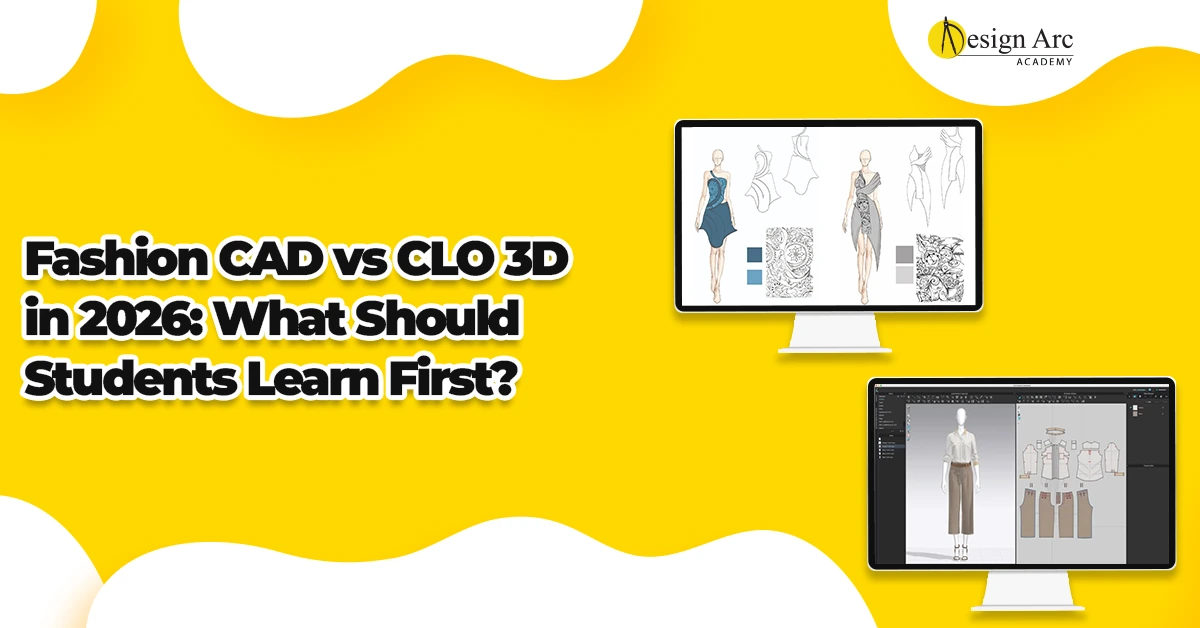
As the fashion industry becomes increasingly digital, students entering the field often face a major decision:
Should I learn Fashion CAD or CLO 3D first?
Searches like fashion CAD vs CLO 3D, digital fashion design tools, and which software is better for fashion design are growing in 2026. This reflects deeper concerns about career direction and skill prioritization.
Both Fashion CAD and CLO 3D are powerful tools — but they serve different purposes within garment development. Understanding how they differ, and how they complement each other, is essential before choosing a learning path.
Understanding Fashion CAD
Fashion CAD (Computer-Aided Design) refers to software primarily used for:
- Digital pattern drafting
- Technical flat creation
- Size grading
- Marker making
- Production documentation
Fashion CAD focuses on technical garment construction and production workflow accuracy.
It is widely used in:
- Apparel manufacturing units
- Export houses
- Textile production companies
- Large-scale garment factories
Designers working in production environments rely on Fashion CAD for precision and scalability.
Understanding CLO 3D
CLO 3D is a 3D garment simulation software that allows designers to:
- Create digital patterns
- Simulate fabric behavior
- Visualize garments on avatars
- Test drape and fit virtually
- Generate high-quality 3D renders
CLO 3D combines pattern making with visualization, making it ideal for digital sampling and buyer presentations.
In 2026, CLO 3D is increasingly used in:
- Fashion startups
- Digital fashion studios
- Export houses adopting virtual sampling
- E-commerce garment visualization teams
It reduces physical sampling and speeds up design approvals.
Core Difference Between Fashion CAD and CLO 3D
The primary difference lies in focus.
Fashion CAD emphasizes technical production accuracy — drafting, grading, and preparing garments for manufacturing.
CLO 3D emphasizes visualization and simulation — allowing designers to see how garments behave before production.
Think of Fashion CAD as the technical backbone and CLO 3D as the digital visualization layer.
Industry Demand in 2026
In India, manufacturing remains strong. Export houses and garment production units continue to rely on Fashion CAD for technical drafting and grading.
However, CLO 3D adoption is growing rapidly due to:
- Sustainability goals
- Reduced sampling costs
- Faster buyer approvals
- Remote collaboration
Students who understand both tools often have a competitive advantage in job interviews.
Salary & Career Scope Comparison
Fashion CAD Career Paths
- Production departments
- Pattern making units
- Apparel export houses
- Garment technologist roles
These roles are technically focused and critical for manufacturing accuracy.
CLO 3D Career Paths
- Digital sampling teams
- Fashion tech startups
- Visualization departments
- Freelance digital garment development
Because CLO 3D aligns with innovation and sustainability, it may offer faster growth in digitally progressive environments.
Which Should Students Learn First?
The answer depends on career goals.
If your goal is:
- Working in manufacturing units
- Joining export houses
- Becoming a technical pattern maker
Start with Fashion CAD to build a strong technical foundation.
If your goal is:
- Working in digital fashion
- Freelancing in 3D garment visualization
- Joining tech-driven fashion brands
Start with CLO 3D.
However, students should first understand garment construction fundamentals. Once pattern logic and fit principles are clear, transitioning into CLO 3D becomes easier.
Without technical garment knowledge, even advanced 3D tools cannot produce realistic results.
Can You Learn Both?
Yes — and that is the most strategic approach.
In 2026, competitive designers are hybrid professionals who understand:
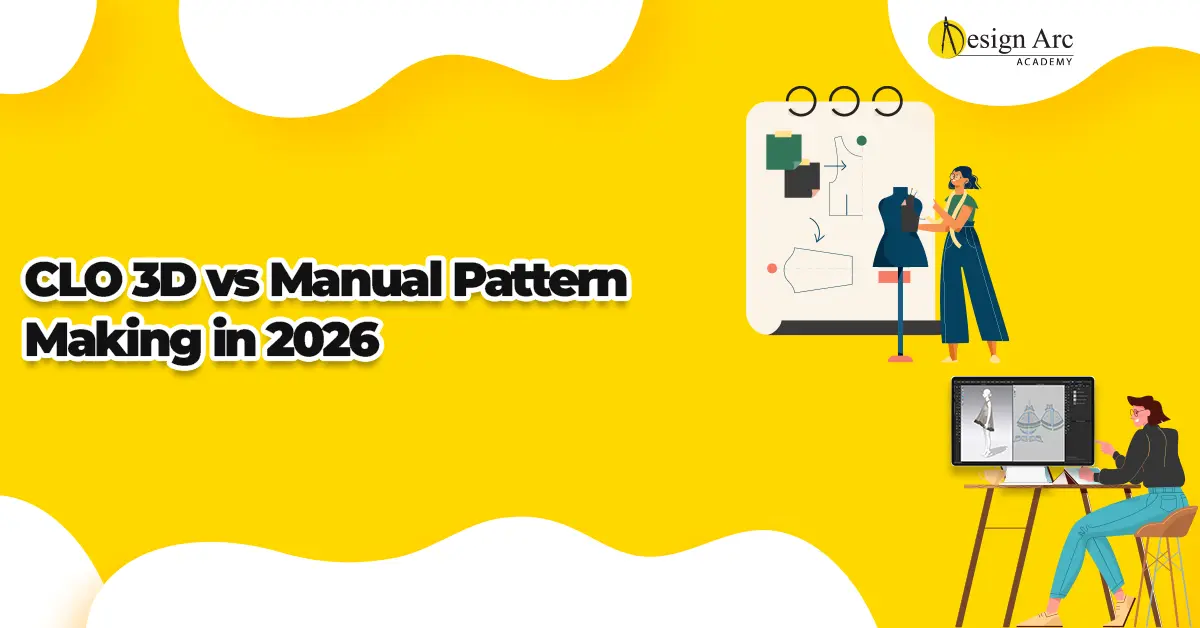
- Manual garment construction
- Fashion CAD drafting
- CLO 3D simulation
This combination increases flexibility, employability, and long-term career growth.
The Future of Digital Fashion Tools
Fashion production is becoming more data-driven and tech-integrated.
Brands are prioritizing:
- Faster time-to-market
- Lower waste production
- Digital prototyping
- Remote collaboration
CLO 3D supports visualization efficiency. Fashion CAD supports production precision.
The future integrates both — rather than replacing one with the other.
Frequently Asked Questions
Is CLO 3D better than Fashion CAD?
They serve different purposes. CLO 3D focuses on visualization; Fashion CAD focuses on technical production drafting.
Which skill has more demand in India?
Both are in demand. However, CLO 3D adoption is growing rapidly due to digital transformation.
Should beginners start with CLO 3D?
Beginners should first understand garment construction fundamentals before mastering advanced digital tools.
Can I get a job with only Fashion CAD?
Yes, especially in manufacturing-focused environments.
Final Thoughts
The debate between Fashion CAD and CLO 3D reflects a broader shift in the fashion industry.
Traditional production workflows still require the precision of Fashion CAD. At the same time, digital-first brands increasingly rely on CLO 3D for visualization and sampling efficiency.
Rather than choosing blindly, students should align learning with career goals.
In 2026, adaptability is the most valuable skill. Designers who combine technical drafting with digital simulation will remain ahead in an evolving fashion landscape.